-

-
Corporate Capability
-
-


 中文版
中文版
Pipe Compensator - Flexible Guardian of Piping Systems
Release time:
2025-03-28
Pipe compensators are an indispensable component of pipeline systems. Their main function is to absorb the elongation, contraction, displacement, and deformation caused by temperature changes, installation errors, vibrations, etc., thereby ensuring the safe and stable operation of the pipeline system.
Pipe compensators are an indispensable component of pipeline systems. Their main function is to absorb the elongation, contraction, displacement, and deformation caused by temperature changes, installation errors, vibrations, etc., in order to ensure the safe and stable operation of the pipeline system.
I. Working Principle of Pipe Compensators
During the process of transporting media, pipelines undergo thermal expansion and contraction due to temperature changes, resulting in changes in pipeline length. If this change is not effectively compensated, stress will be generated inside the pipeline, and in severe cases, it may lead to pipeline rupture. Pipe compensators are designed to solve this problem. Through their elastic deformation capabilities, they absorb the length changes caused by temperature changes, thereby reducing the internal stress of the pipeline and protecting it from damage.
II. Types of Pipe Compensators
According to different structures and working principles, pipe compensators can be divided into several types, mainly including:
Natural compensators: such as L-shaped and Z-shaped natural curved pipe sections, which absorb thermal expansion through the bending of the pipe without the need for additional compensators.
Square compensators: composed of four 90° bends, which absorb the thermal expansion of the pipe through the elastic deformation of the bends. This type of compensator has a simple structure, is easy to manufacture, but occupies a large area.
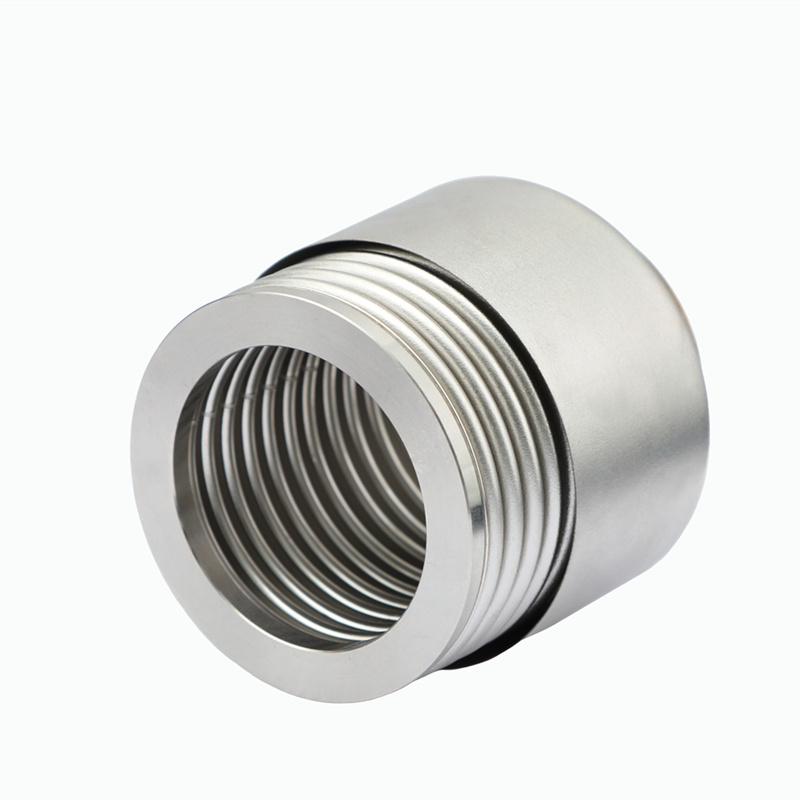
Bellows compensators: utilize the elastic deformation of bellows to absorb the thermal expansion of the pipe. Bellows compensators have advantages such as small size, large compensation capacity, and easy installation, and are widely used in various pipeline systems.
Sleeve-type compensators: absorb the thermal expansion of the pipe through the relative sliding between the outer sleeve and the inner sleeve. This type of compensator is suitable for high-temperature and high-pressure pipeline systems.
III. Selection Principles of Pipe Compensators
When selecting pipe compensators, the specific conditions of the pipeline system should be considered, including the nature of the medium, temperature range, pressure level, pipe diameter, installation method, etc. Generally, the following principles should be followed:
Meet the compensation requirements: The compensation capacity of the compensator should be greater than or equal to the length change of the pipe caused by temperature changes.
Adapt to the nature of the medium: The material and structure of the compensator should adapt to the nature of the medium in the pipeline to avoid corrosion or leakage.
Consider the pressure level: The design pressure of the compensator should meet the pressure requirements of the pipeline system.
Easy to install and maintain: The installation location of the compensator should be convenient for construction and maintenance, and its service life and reliability should also be considered.
IV. Importance of Pipe Compensators in Pipeline Systems
Pipe compensators play a crucial role in pipeline systems. They can effectively absorb the elongation, contraction, displacement, and deformation caused by temperature changes, installation errors, vibrations, etc., thereby ensuring the safe and stable operation of the pipeline system. At the same time, compensators can also reduce the stress and vibration of the pipeline system, extend the service life of the pipeline, and reduce maintenance costs.