-
-
Corporate Capability

-
-


 中文版
中文版
China's space station in-orbit construction second battle begins! The Long March 7 No. 3 rocket successfully launched the Tianzhou 2 cargo spacecraft
Release time:
2021-07-12
China's space station in-orbit construction second battle begins! The Long March 7 No. 3 rocket successfully launched the Tianzhou 2 cargo spacecraft
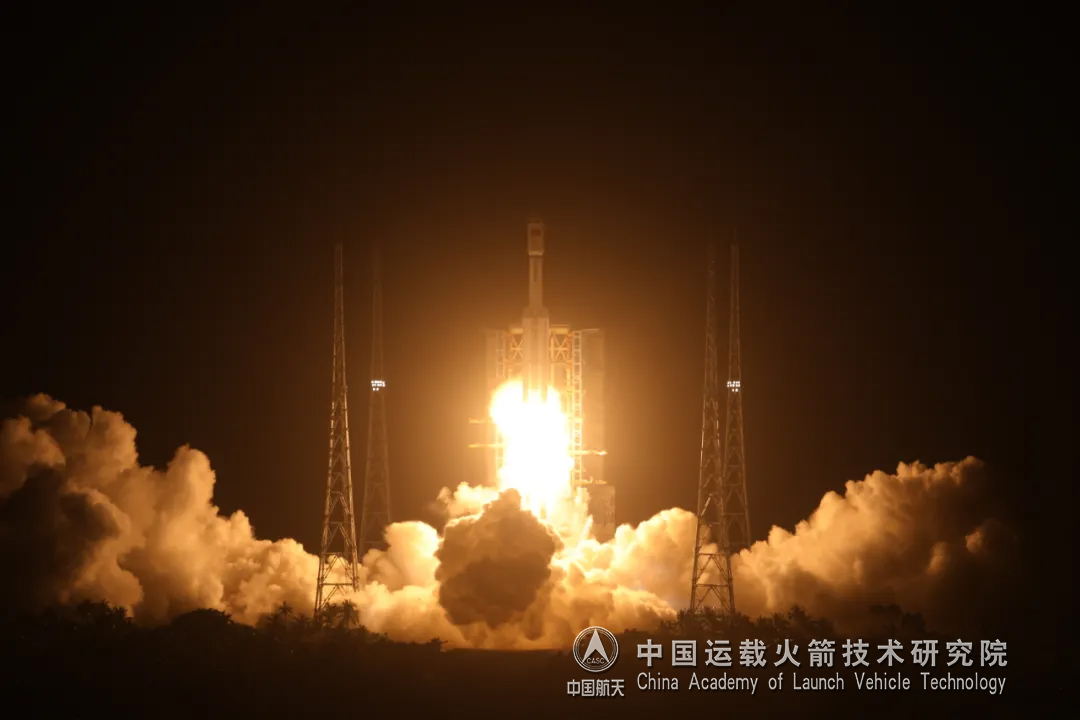
At 8:55 pm on May 29, the Long March 7 Y3 carrier rocket, developed by the Rocket Academy, was launched on time from the Wenchang Space Launch Center in Hainan, accurately sending the Tianzhou 2 cargo spacecraft into its predetermined orbit. The launch was a complete success.
The result was perfect, but this flight mission experienced a setback of "launch postponement." Faced with sudden difficulties and challenges, space personnel once again demonstrated a serious and pragmatic work style, excellent qualities of fearlessness and perseverance, and a sense of responsibility that avoids difficulties and does not shirk responsibilities. One month after the Long March 5B Y2 carrier rocket opened the curtain for the construction of China's space station in orbit, this mission successfully launched the second battle of China's space station in-orbit construction project, laying the foundation for the smooth implementation of subsequent missions.
This launch was the 371st launch of the Long March series of rockets.
China Space Station's Exclusive "Courier Brother"

The Long March 7 carrier rocket is a new generation of medium-sized carrier rockets developed to meet the needs of China's space station project for launching cargo spacecraft. As a messenger for transporting cargo and propellant to the space station and space science laboratory, the cargo spacecraft is affectionately called the "courier brother" in space. In April 2017, the Long March 7 Y2 carrier rocket successfully sent China's first cargo spacecraft, Tianzhou 1, into its predetermined orbit. Four years later, the space express service is open again, and the Long March 7 carrier rocket sets off again to send the Tianzhou 2 cargo spacecraft into space. Afterwards, Tianzhou 2 will dock with the Tianhe core module in orbit to complete the transportation of fuel and materials, laying a good foundation for the subsequent launch of manned spacecraft.
According to the space station in-orbit construction task plan, China will continuously implement 11 flight missions in the next two years, including 3 space station cabin segment launches, 4 cargo spacecraft launches, and 4 manned spacecraft launches. Xu Lijie, the on-site commander and chief designer of the Long March 7 carrier rocket test team, said, "Eleven missions in two years are closely linked, like a relay race. The success or failure of each mission will affect whether China's space station construction plan can be successfully implemented. This mission, as a key battle in the construction phase of China's space station project, represents the national image and concerns hundreds of millions of people. It is a glorious mission with great responsibility."
More than 130 improvements make the rocket perform better
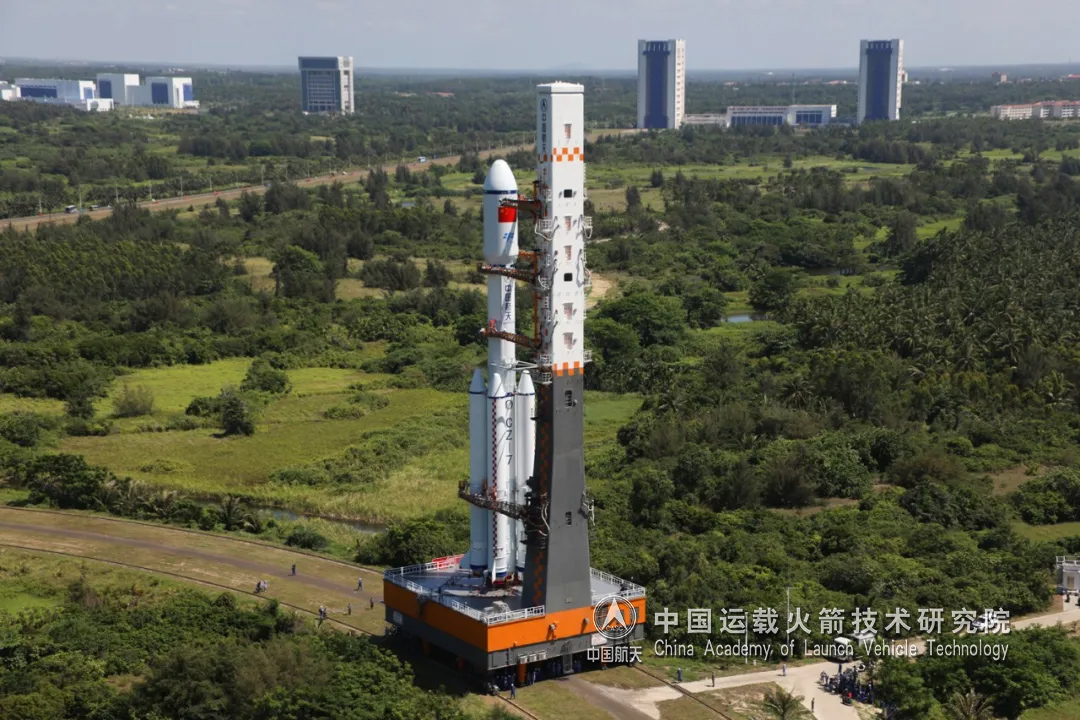
This mission is the third launch of the Long March 7 carrier rocket. Four years have passed since the launch of Long March 7 Y2. During this period, the model team has carried out a large number of optimization and improvement designs. It has not only achieved a technological leap from "zero window" to "narrow window" launch, but also through more than 130 improvements such as simplifying and optimizing the onboard measurement system and optimizing the tank pressurization design, making the rocket perform better and more conducive to batch production and high-density launches.
Simplify and optimize the design of the onboard measurement system. Measurement parameters used for research have been reduced, the number of onboard measurement points has been reduced by about one-third, and the number of single units in the measurement system has been reduced by nearly half. This not only saves costs but also helps improve the sampling accuracy of some key parameters. In addition, this rocket uses a high-code-rate Ka-band space-based measurement system. Compared with the S-band measurement system used by the Long March 7 Y2 carrier rocket, the transmission code rate has increased by more than 20 times, achieving a blind-free telemetry throughout the rocket flight.
Optimize the onboard tank pressurization design. Based on the analysis of the results of the first two flight tests, without affecting normal use, one tank pressurization gas cylinder was reduced in the booster, and the pressure control belts of the various module tanks were optimized, improving the utilization rate of pressurized gas.
The composite coating of the rocket booster and the first-stage tail end and the first-stage rear transition section was changed to an ordinary coating. After the improvement, the construction process was simplified, and the production cycle was shortened. Taking the first-stage rear transition section as an example, the production cycle was shortened from the original 18 days to 13 days after the improvement, laying the foundation for subsequent batch production.
"Focusing on zero-window launch and flight success or failure, we have combed through every detail, fully identified weaknesses in the design and made improvements. In addition, we have learned from other rocket quality issues and taken a proactive approach to ensure the successful completion of this launch mission," said Xu Lijie.
Future Main Force of Space Launches
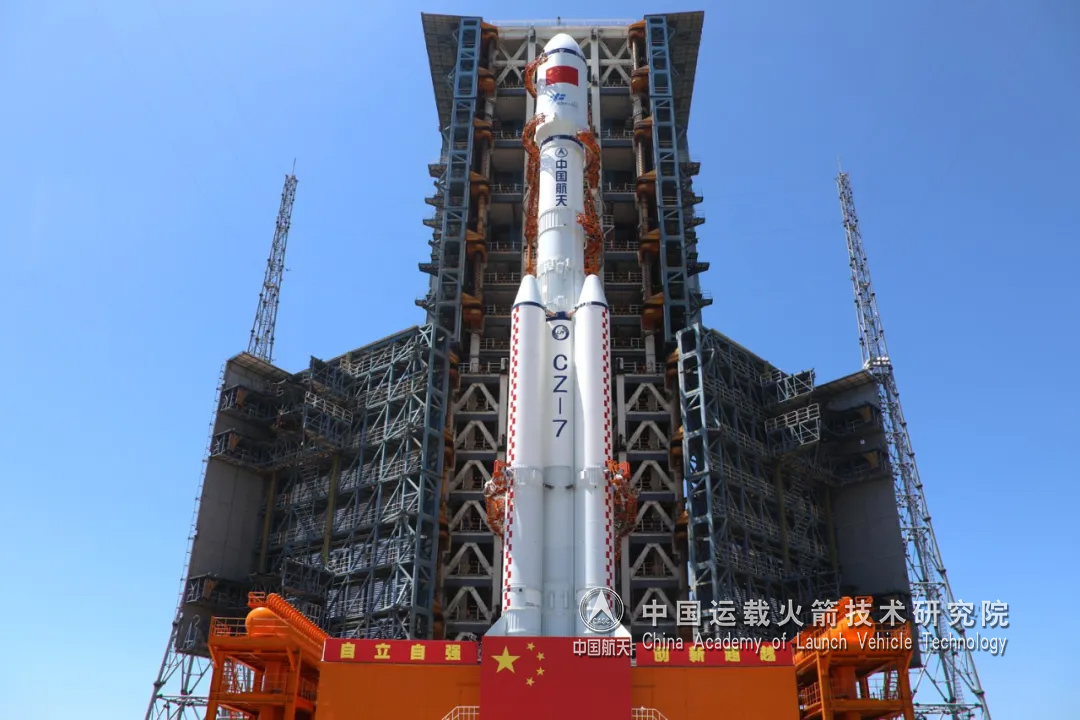
The Long March 7 carrier rocket is the basic model of China's new generation of medium-sized carrier rockets. Based on the Long March 7 rocket, the Long March 7A carrier rocket with high-orbit launch capability has been derived. With the improvement of the technical schemes and the stability of the performance of the two types of rockets, the Long March 7 series of carrier rockets can gradually replace the relevant models of China's current Long March carrier rockets, becoming the "main force" of China's future space launch missions and undertaking more major launch missions. In addition to the four launches in two years during the space station construction phase, the Long March 7 carrier rocket will also maintain an equivalent of two launches per year after entering the space station operation phase.
In addition, the Long March 7 carrier rocket has a near-Earth orbit carrying capacity of 14 tons. In terms of "strength," it is more than half stronger than traditional fuel carrier rockets. Therefore, it can not only achieve the launch of large payloads but also, when equipped with an upper stage or a second stage using multiple start technology, achieve the launch of large payloads or multi-satellite networking in sun-synchronous orbit.
Source: China Academy of Launch Vehicle Technology