-

-
Corporate Capability
-
-


 中文版

Working principle and characteristics of metal energy storage devices
Release time:
2024-11-15
A metallic energy storage device is a device that can convert mechanical energy into elastic potential energy. It mainly consists of two metallic corrugated tubes, an inner and an outer one, filled with a specific working medium. When external pressure is applied, the metallic corrugated tubes deform, converting mechanical energy into elastic potential energy and storing it; when the external pressure disappears, the metallic corrugated tubes return to their original state, releasing the stored elastic potential energy.
Metal accumulators, with their unique structure and performance, have become key components in hydraulic systems, mechanical equipment, and electrical systems. The following is a comprehensive analysis of metal accumulators, including their definition, working principle, structural characteristics, application fields, and advantages and disadvantages.
I. Definition
A metal accumulator is a device that can convert mechanical energy into elastic potential energy. It mainly consists of two metal bellows, an inner and an outer, filled with a specific working fluid. When external pressure is applied, the metal bellows deform, converting mechanical energy into elastic potential energy that is stored; when the external pressure disappears, the metal bellows return to their original state, releasing the stored elastic potential energy.
II. Working Principle
The working principle of a metal accumulator is based on elastic deformation. When external pressure acts on the outer bellows, the inner bellows is compressed and expands inward, simultaneously compressing the working fluid in between. In this process, mechanical energy is converted into elastic potential energy stored in the metal bellows and the working fluid. When the external pressure decreases or disappears, the inner bellows returns to its original state under the action of elastic force, pushing the working fluid to release the stored energy.
III. Structural Characteristics
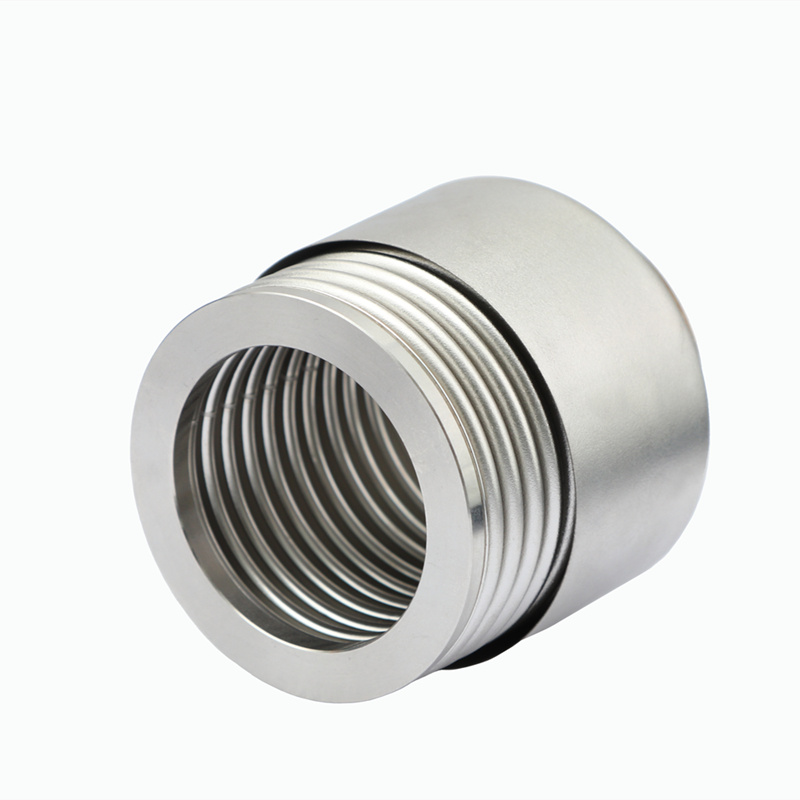
Metal accumulators typically consist of inner and outer bellows, flanges, sealing rings, and a pressure cap. The inner and outer bellows are usually made of high-strength, corrosion-resistant metal materials such as stainless steel, copper, or aluminum. The flanges and pressure cap are used to secure the bellows and connect to other equipment, while the sealing rings ensure the accumulator's airtightness, preventing leakage of the working fluid.
IV. Application Fields
Metal accumulators are widely used in various mechanical and electrical equipment, such as pressure sensors, hydraulic presses, forming machines, batteries, and gas turbines. Especially in hydraulic systems, metal accumulators can store the energy of hydraulic oil, so that energy can be released when needed to provide power. In addition, metal accumulators are also often used in aerospace, automotive manufacturing, and port handling to improve equipment performance and efficiency.
V. Advantages and Disadvantages
The advantages of metal accumulators include simple structure, small size, light weight, long life, high energy density, no pollution, and no maintenance required. However, it also has some disadvantages, such as higher price, limited energy storage capacity, and the need for regular leak detection.