-

-
Corporate Capability
-
-


 中文版
中文版
Tips for Selecting Armored Corrugated Pipes
Release time:
2023-03-17
Armored corrugated pipes are divided into steel pipes and aluminum pipes. Steel pipes are further divided into carbon steel pipes and stainless steel pipes; aluminum pipes are further divided into aluminum pipes and aluminum alloy pipes. Carbon steel pipes have the advantages of being lightweight, easy to process, and inexpensive, while stainless steel pipes have the advantages of strong corrosion resistance, good oxidation resistance, and excellent mechanical properties, making them suitable for pipe fittings in highly corrosive environments. Aluminum alloy pipes have the advantages of weathering resistance, corrosion resistance, heat resistance, and impact resistance, making them suitable for high-temperature environments.
I. Armored Corrugated Pipe Selection
1. Material and Model
Armored corrugated pipes are divided into steel pipes and aluminum pipes. Steel pipes are further divided into carbon steel pipes and stainless steel pipes; aluminum pipes are further divided into aluminum pipes and aluminum alloy pipes. Among them, carbon steel pipes have the advantages of light weight, easy processing, and low price, while stainless steel pipes have the advantages of strong corrosion resistance, good oxidation resistance, and excellent mechanical properties, suitable for pipe fittings in highly corrosive environments. Aluminum alloy pipes have the advantages of weathering resistance, corrosion resistance, heat resistance, and impact resistance, suitable for high-temperature environments.
2. Specifications and Dimensions
According to the use environment of the armored corrugated pipe, its specifications and dimensions need to be determined. There are two types: standard specifications and non-standard specifications. Standard specifications refer to products that meet national standards, with high dimensional accuracy but relatively high prices; non-standard specifications refer to the dimensional parameters provided by the customer, with lower prices but possible differences in dimensional accuracy.
II. Installation of Armored Corrugated Pipe
1. Preparation
First, prepare the necessary tools, including hand saws, hammers, files, etc., and ensure that the tools are in good condition to prevent accidents during cutting. In addition, sufficient armored corrugated pipes, as well as pipe supports and support bolts, should be prepared to ensure the quality of the installation.
2. Installation Steps
Prepare the foundation in the construction area and inspect the armored corrugated pipe to ensure that it meets quality standards. Install the armored corrugated pipe according to the installation drawings, requiring it to be compact and firm, and ensuring that every part is securely installed. After installation, check again to ensure installation quality.
III. Maintenance of Armored Corrugated Pipe
1. Maintenance Materials
To maintain the armored corrugated pipe, first prepare the necessary maintenance materials, including anticorrosion agents, waterproof agents, anti-rust glue, etc. These materials can effectively extend the service life of the pipe fittings.
2. Cleaning and Maintenance
Regularly clean and maintain the armored corrugated pipe to avoid damage caused by rust. First, regularly clean the dirt on the surface of the pipe fittings to prevent rust. Second, regularly apply anticorrosion agents to the surface of the pipe fittings to extend their service life.
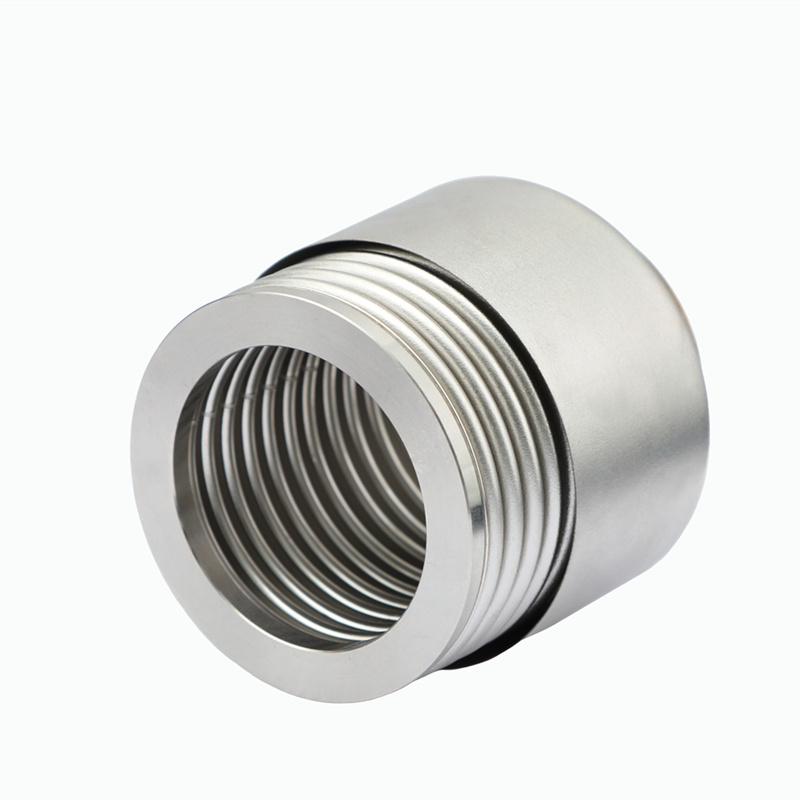
Armored corrugated pipe is a composite pipe, consisting of an outer steel protective casing and an inner elastic corrugated pipe. The corrugated pipe has superior properties such as high strength, heat resistance, corrosion resistance, and impact resistance.
Armored corrugated pipes not only have good mechanical properties but also high efficiency, economy, and environmental protection. Using energy-saving technology greatly reduces energy consumption and better protects the environment.